
Asylum Case Management Built for Accuracy, Credibility, and Control
In asylum law, accuracy and timing are critical to building a credible case. Each matter involves sensitive facts, strict deadlines, and complex documentation. A dedicated Remote Case Manager organizes case information and manages required filings. This structured support improves efficiency while maintaining care and consistency throughout the case.

The Bottleneck: Why Asylum Intake Demands Expertise
Time-Intensive and High-Stakes Intake
Asylum intake involves detailed personal histories, multiple forms, and coordination across USCIS and immigration courts. Managing these requirements while tracking strict deadlines and maintaining consistent client communication places significant strain on in-house teams.
Elevated Risk of Missing or Inconsistent Information
Asylum cases rely heavily on credibility and complete documentation. Missing affidavits, inconsistent details, or incomplete evidence can weaken a claim and lead to delays or denials. Structured intake oversight helps ensure all required materials are collected, organized, and aligned.
Attorney Administrative Overload
The administrative demands of asylum intake—document coordination, follow-ups, and data entry—can divert attorneys from legal analysis and case preparation. A Remote Case Manager handles these operational tasks, allowing attorneys to focus on strategy, advocacy, and representation.

Asylum Case Management: A Structured Process
- Step 1: Intake Initiation & Client Response
- Step 2: Verification & Ongoing Follow-Up
- Step 3: Case Organization & Attorney Handoff
Tools and Technology Supporting Asylum Case Management
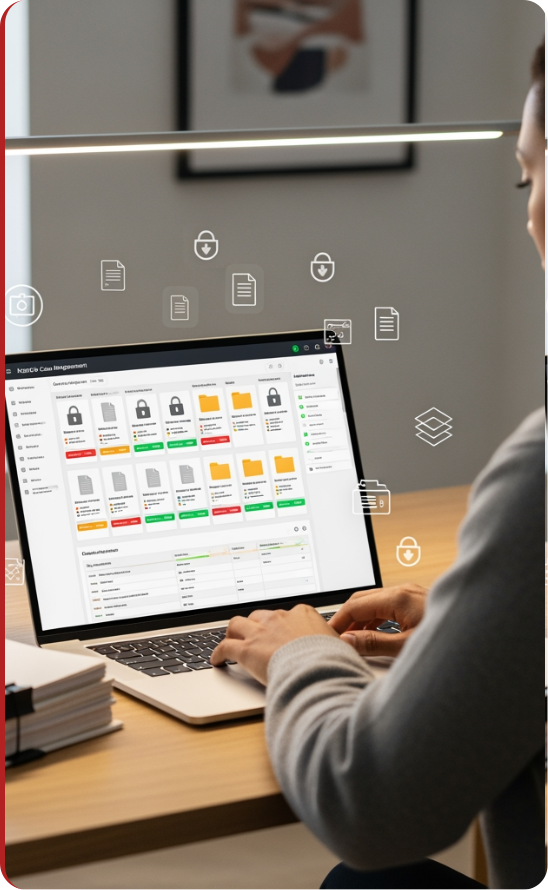
Remote Case Managers operate within secure, purpose-built systems designed to support the sensitive, document-heavy nature of asylum case management while maintaining strict compliance standards.
- Immigration Case Management Systems
- HIPAA-Compliant Security Framework
- Automated Follow-Ups & Workflow Control
- Digital Intake & Scheduling Support
Measurable Benefits to Your Asylum Practice
Reduced Operational Costs
Avoid the high overhead costs of hiring and training in-house staff. With a Remote Case Manager, you gain an experienced legal professional at a fraction of the cost.
Faster Case Progression
A smooth, organized intake allows for quicker document submission, faster client intake, and reduced delays in legal proceedings—often saving weeks off the case timeline.
Improved Accuracy & Compliance
Detailed data capture, automated follow-ups, and consistent verification result in more accurate client files, fewer errors, and fewer reworks for attorneys and paralegals.
Increased Efficiency
Handle a higher volume of asylum cases, reduce missed opportunities, and speed up case initiation—firms often experience 20–40% faster case setup.