
Workers’ Compensation Insurance Liaison Support With Full Visibility
Insurance communication can slow Workers’ Compensation claims when updates are delayed or documentation is fragmented. A Remote Case Manager acts as your Insurance Liaison, managing carrier communication and tracking claim status. This gives your firm clear visibility into every claim without added administrative burden.

The Bottleneck: Why Insurance Liaison Support Is Critical
High-Volume Carrier & Adjuster Communication
Workers’ Compensation claims require constant communication with insurers, adjusters, and third-party administrators. As caseloads grow, in-house teams struggle to keep up with status checks, coverage updates, and documentation requests.
Risk of Delayed or Incomplete Claim Updates
Missed emails, delayed responses, or inconsistent information can slow approvals, trigger disputes, and extend claim timelines. Small communication gaps with carriers often create major downstream delays.
Liaison Tasks Pull Focus From Legal Strategy
Attorneys and claims staff are often pulled into insurer coordination instead of focusing on legal strategy and case progression. Delegating insurer communication and documentation tracking to a Remote Case Manager acting as your Insurance Liaison keeps claims moving and frees senior staff for higher-value work.
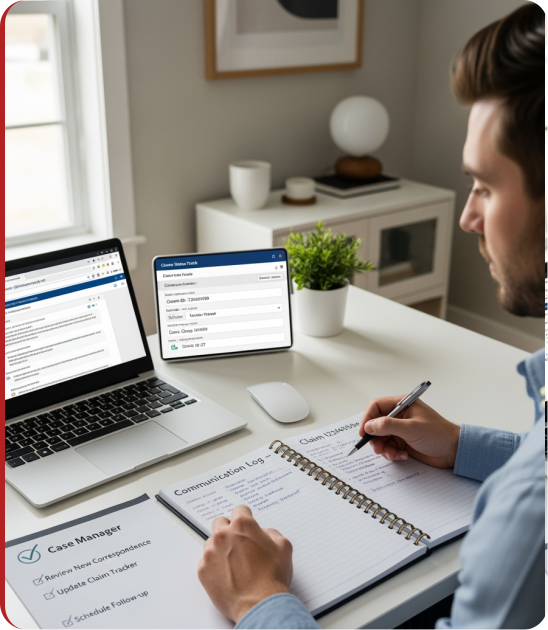
Insurance Liaison Process: From Update to Resolution
- Step 1: Carrier Communication & Coordination
- Step 2: Coverage Verification & Status Tracking
- Step 3: Documentation Delivery & Reporting
Systems That Enable Insurance Liaison Support
We use insurer-focused technology and secure communication systems to manage carrier coordination, claim status tracking, and documentation flow with accuracy and visibility.
- Case Management Software (CMS)
- Carrier Portal & Adjuster Platform Access
- Secure Cloud Document Storage
- Claim Status & Coverage Tracking Tools
- Automation & Follow-Up Systems
- Reporting & Visibility Dashboards

Insurance Liaison Support: Practical Advantages
Reduced Administrative Overhead
Outsourcing insurer coordination removes the need for in-house liaison staff. Your firm gains specialized carrier communication support at a predictable, scalable cost.
Faster Claim Progression
Proactive follow-ups, organized documentation delivery, and real-time status tracking help accelerate insurer decisions and reduce stalled claim timelines.
Improved Coverage & Compliance Control
Structured tracking of approvals, denials, and carrier requirements reduces compliance risk and missed insurer requests. This minimizes disputes and downstream claim delays.
Increased Claim Throughput
Centralized carrier communication allows your firm to manage more Workers’ Compensation claims without adding internal staff. Remote Case Managers keep insurers engaged and claims progressing without bottlenecks.