
Personal injury settlements often raise an important question for injured clients and the law firms handling their lawsuits: are personal injury settlements taxable?
The short answer is it depends on what the settlement compensates for. Some portions of a personal injury settlement are not subject to taxes, while others may be fully taxable under federal law. Understanding the difference is critical—not only for clients planning their finances, but also for law firms responsible for properly documenting settlements and managing post-resolution follow-up.
This guide explains how personal injury settlement taxes work, which damages are taxable, and why accurate case management plays a key role in reducing confusion and risk.
How the IRS Determines Whether a Settlement Is Taxable
The IRS relies on the “origin of the claim” to decide whether settlement proceeds are taxable. Under Internal Revenue Code Section 104(a)(2), damages received due to physical injury or physical sickness are generally excluded from taxable income.
What this means for your practice:
- Compensation for the physical injury itself is usually non-taxable.
- Compensation replacing income, penalizing a defendant, or including interest is typically taxable.
- The label on the check doesn't matter; the IRS looks at the underlying reason for the payment.
Because many personal injury lawsuits involve multiple damage categories, clear allocation within the settlement agreement is essential.
Which Parts of a Personal Injury Settlement May Be Taxable?
Why Settlement Documentation Matters for Taxes
Tax issues often arise after a case is resolved, when clients receive funds and begin preparing tax filings. Poor documentation during the case increases the risk of disputes, misreporting, or IRS scrutiny.
Clear documentation should:
- Itemize the settlement by specific damage type (medical, lost wages, pain & suffering, etc.).
- Explicitly separate taxable from non-taxable components in writing.
- Align perfectly with medical records, insurance and demand documentation compiled.
- Match the final settlement agreement word-for-word on allocations.
This is not just a legal issue—it is an operational case management responsibility.
Do You Have to Report a Personal Injury Settlement on Taxes?
Yes, but only for the taxable portions. While compensation for a physical injury is generally tax-exempt, any part of a settlement allocated to lost wages, punitive damages, or interest must be reported as income to the IRS. It is the specific breakdown of the settlement, not its total value, that dictates the reporting requirement.
In practice, many settlements are partially reportable. Even when most of the recovery is non-taxable, items such as interest, lost wages, or punitive damages can trigger reporting requirements. The IRS specifically identifies these categories as taxable and reportable income in its guidance on taxable and nontaxable income.
From a compliance standpoint, what matters most is how the settlement is recorded and allocated in the case file. Settlement agreements that clearly distinguish between compensatory and taxable damages make post-settlement reporting more straightforward for clients and reduce the risk of IRS follow-up.
For personal injury law firms, this reinforces the importance of structured case management during settlement coordination. Organized records, accurate damage categorization, and consistent documentation across insurance and legal files help ensure that only the appropriate portions of a settlement are reported—no more and no less.
How Personal Injury Case Management Reduces Tax Confusion
Personal injury cases involve complex records, multiple insurance carriers, and detailed settlement breakdowns. Dedicated case management ensures that settlement data is accurate and accessible long after lawsuits conclude.
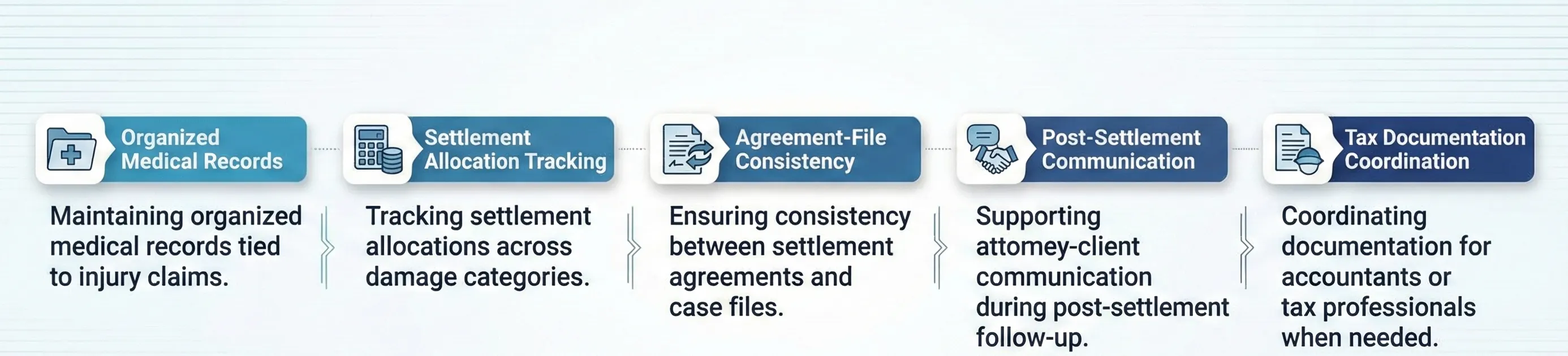
Effective personal injury case management supports tax clarity by:
- Maintaining organized medical records tied to injury claims
- Tracking settlement allocations across damage categories
- Ensuring consistency between settlement agreements and case files
- Supporting attorney-client communication during post-settlement follow-up
- Coordinating documentation for accountants or tax professionals when needed
Remote Case Managers trained in personal injury workflows help law firms maintain structured records throughout the lifecycle of a case, not just until the settlement check arrives.
Common Questions Clients Ask About Personal Injury Settlement Taxes
Do I have to report my settlement to the IRS?
Some portions may need to be reported, depending on how damages are classified.
Will I receive a 1099 for my settlement?
Possibly, especially for taxable portions like interest or punitive damages.
Is emotional distress taxable?
Yes, if it is not tied to a physical injury.
Can settlement structuring reduce taxes?
Settlement allocation can affect tax treatment, but legal and tax professionals must handle this carefully.
Should I speak with a tax professional?
Yes. Clients should always consult a qualified tax advisor regarding settlement proceeds.
Supporting Accurate Settlements Through Structured Case Management
Managing the complex tax implications of personal injury settlements requires meticulous documentation from day one. This is where structured case management becomes essential.
If your firm handles high-volume personal injury cases, our pre-vetted, legal-trained remote case managers ensure every settlement is documented with precision. This reduces post-settlement confusion for your clients and minimizes compliance risk for your firm, ensuring settlements are handled accurately and professionally—well beyond case resolution.
FAQ's
1) Do I report a personal injury settlement to the IRS?
You usually do not report it if the money is for physical injuries or sickness. You must report parts for lost wages, interest, or punitive damages.
2) Will I receive a 1099 for a personal injury settlement?
Often no, if the settlement is for physical injury. You may get a 1099 if the payment includes interest, lost income, or non-physical damages.
3) Do I have to pay taxes on money received from a settlement?
Not usually. Compensation for physical injuries is tax-free. Taxes may apply to lost wages, emotional distress without injury, or punitive damages.
4) How do I avoid paying taxes on settlements?
Make sure the settlement clearly states it is for physical injury or sickness. Keep documents and ask a tax professional before filing your return.
5) Do you pay federal income tax on a personal injury settlement?
No federal tax is owed on settlements for physical injury or illness. However, taxable portions include interest, lost wages, and punitive damages.









.webp)




.webp)


%20(1).webp)





















%20(2)%20(2).avif)
.avif)