
Understanding the difference between civil litigation and commercial litigation is essential for law firms managing diverse caseloads. While the two terms are often used interchangeably, they represent distinct categories of legal disputes with different scopes, procedural demands, and operational requirements. Misunderstanding this distinction can lead to inefficient workflows, misallocated resources, and avoidable case delays.
This guide explains civil vs commercial litigation clearly, outlines how they differ in structure and process, and shows why recognizing these differences matters for effective case management.
Why the Distinction Between Litigation Types Matters
Civil litigation is a broad legal category that includes many types of non-criminal disputes. Commercial litigation, by contrast, is narrower and business-focused. The distinction matters because each litigation type places different demands on attorneys, staff, and case management systems.
For law firms, clarity at this level affects:
- How cases are staffed
- How documentation is managed
- How discovery timelines are handled
- How support workflows are structured
Understanding the difference is not academic, it directly impacts case efficiency and risk control.
What Is Civil Litigation?
Civil litigation refers to non-criminal legal disputes between individuals, organizations, or government entities where one party seeks compensation or specific legal remedies rather than criminal penalties.
These cases are typically governed by civil procedure rules and resolved through motions, settlements, trials, or alternative dispute resolution.
Civil Litigation Case Categories
Common civil litigation case types include:
- Personal injury claims
- Employment disputes
- Family law matters
- Real estate and property disputes
- Consumer and individual contract disputes
These cases often involve individual plaintiffs, relatively defined discovery scopes, and more standardized procedural paths.
What Is Commercial Litigation?
Commercial litigation is a subset of civil litigation that focuses specifically on disputes arising from business and commercial relationships. The parties involved are usually corporations, partnerships, or other business entities.
The defining feature of commercial litigation is not the court, it is the business context and financial complexity of the dispute.
Commercial Litigation Case Categories
Common commercial litigation matters include:
- Business-to-business contract disputes
- Shareholder and partnership conflicts
- Business torts
- Intellectual property disputes
- Regulatory and compliance-related litigation
These cases typically involve higher financial stakes, longer timelines, and extensive documentation.
Structural Differences Between Civil and Commercial Litigation
The most direct way to understand the distinction is to compare their structural characteristics.
This comparison highlights why commercial litigation demands more specialized handling, even though it falls under the broader civil litigation umbrella.
Procedural Differences That Impact Case Handling
Beyond structure, procedural realities further separate these litigation types.
Discovery Scope and Volume
Civil litigation often involves a manageable set of documents and evidence. Commercial litigation, however, frequently requires:
- Large-scale document production
- Contract histories
- Financial records
- Internal communications
This increases both time pressure and organizational risk. According to U.S. federal court data, civil cases that proceed to trial can take three to five years or longer to fully resolve, compared to significantly shorter timelines for cases that settle early. This gap highlights why complex litigation requires sustained discovery management, long-term coordination, and consistent case oversight.
Jurisdictional and Strategic Complexity
Commercial disputes may involve:
- Arbitration clauses
- Specialized business courts
- Multi-jurisdictional considerations
These procedural factors extend timelines and increase coordination demands across teams.
Settlement and Resolution Dynamics
While many civil cases settle early, commercial litigation often involves strategic negotiation, staged settlements, or prolonged motion practice due to financial and reputational implications.
Differences in Case Types and Legal Support Requirements
Legal differences translate directly into different support needs, which many firms underestimate. Data published by the Administrative Office of the U.S. Courts shows that business and contract-related disputes account for a significant share of active civil litigation filings, reinforcing why complex commercial matters require higher levels of documentation control, extended discovery coordination, and sustained case management support.
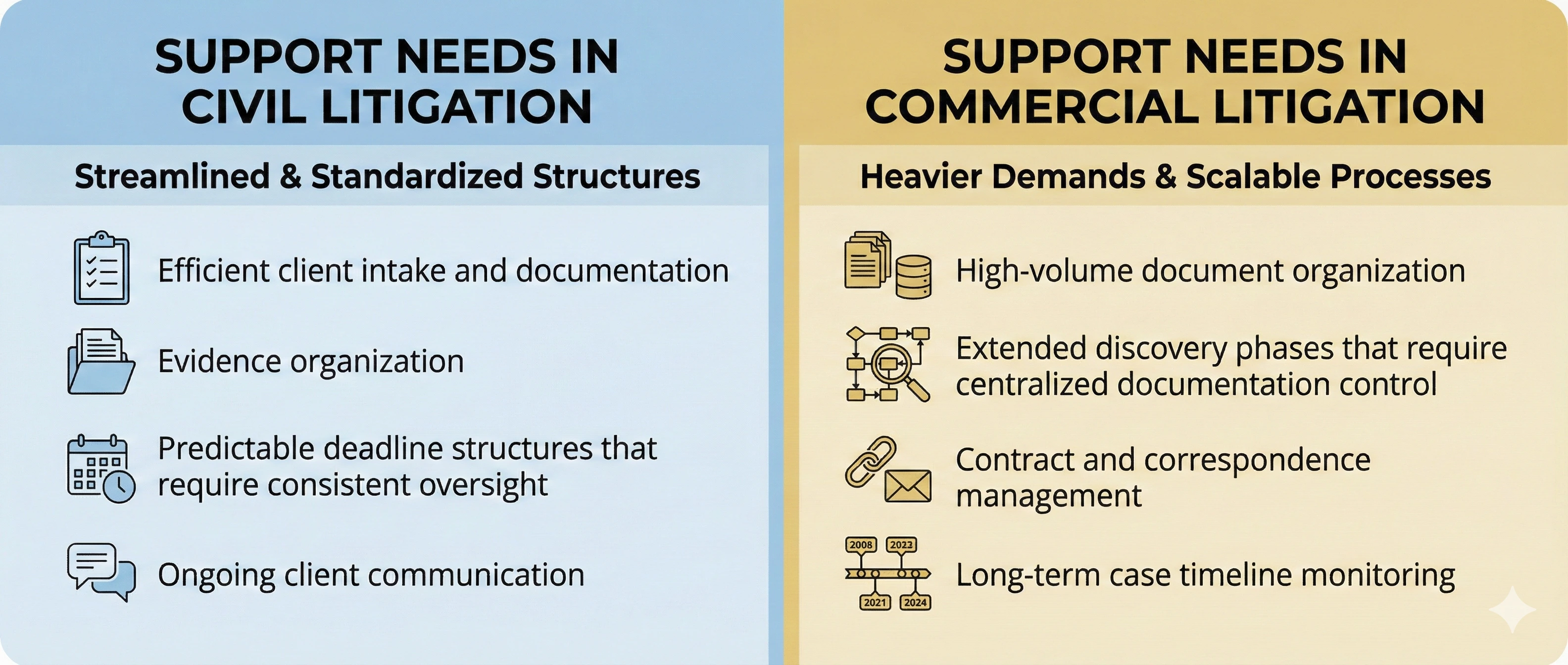
Support Needs in Civil Litigation
Civil litigation commonly requires:
- Efficient client intake and documentation
- Evidence organization
- Predictable deadline structures that require consistent oversight
- Ongoing client communication
Support structures tend to be repeatable and standardized across cases.
Support Needs in Commercial Litigation
Commercial litigation places heavier demands on support teams, including:
- High-volume document organization
- Extended discovery phases that require centralized documentation control
- Contract and correspondence management
- Long-term case timeline monitoring
These cases benefit from consistent, scalable case management processes to avoid bottlenecks.
How Case Managers Support Civil Litigation
In civil litigation, case managers play a critical role in maintaining procedural consistency. Their responsibilities typically include:
- Managing case intake and file setup
- Tracking deadlines and court dates
- Organizing medical, employment, or property records
- Coordinating updates between attorneys and clients
Effective case management ensures routine civil matters move forward without administrative delays.
How Case Managers Support Commercial Litigation
Commercial litigation requires a more intensive form of case management. Case managers often support attorneys by:
- Coordinating large-scale discovery workflows
- Organizing contracts and financial documentation
- Monitoring long-running case milestones
- Supporting motion and filing schedules over extended timelines
Given the volume and duration of these cases, structured case oversight is essential to reduce risk and maintain efficiency.
Why Remote Case Managers Are Effective Across Litigation Types
Both civil and commercial litigation benefit from dedicated case management support, but remote models offer unique advantages.
Remote case managers provide:
- Scalability, allowing firms to adjust support based on caseload volume
- Consistency, with standardized workflows applied across cases
- Operational efficiency, reducing administrative strain on attorneys
For firms handling mixed litigation types, remote support helps maintain continuity without increasing fixed overhead.
Choosing the Right Case Management Model Based on Litigation Type
Civil and commercial litigation follow the same legal framework, but they differ significantly in complexity, timelines, and case management demands. Aligning your case management model with your firm’s dominant litigation type improves efficiency, reduces administrative risk, and supports consistent outcomes.
Civil-heavy practices benefit from standardized processes and predictable oversight, while commercial-focused firms require robust documentation control and sustained case monitoring. Mixed practices need scalable support that adjusts as case complexity changes.
Optimize Your Litigation Workflow
By integrating legal-trained, U.S. law-experienced case managers into your practice, you eliminate the administrative bottlenecks that stall case progress and drain attorney resources. These professionals bring a foundational knowledge of U.S. civil procedure and litigation workflows, allowing them to provide seamless, scalable support across both civil and commercial matters without disrupting your firm's daily operations.
FAQ’s
1. How do case management needs differ between civil and commercial litigation?
Civil cases usually require standardized intake and deadline tracking, while commercial litigation demands structured document control, extended timelines, and consistent case manager oversight.
2. Is commercial litigation considered a type of civil litigation?
Yes. Commercial litigation is a subset of civil litigation, but it involves business disputes that typically require more detailed documentation, discovery coordination, and ongoing case management.
3. Which is more complex: civil litigation or commercial litigation?
Commercial litigation is generally more complex due to higher financial stakes, broader discovery requirements, longer timelines, and the need for organized case management support.
4. Do civil and commercial litigation cases follow the same legal process?
Both follow civil procedure rules, but commercial cases often involve expanded discovery, strategic motions, and longer case lifecycles that increase case management demands.
5. Why does understanding civil vs commercial litigation matter for law firms?
Knowing the difference helps law firms align case managers with workload needs, manage documentation efficiently, and design workflows that support both civil and commercial cases.









.webp)




.webp)


%20(1).webp)





















%20(2)%20(2).avif)
.avif)