
Facing a legal issue can feel overwhelming. Whether you're dealing with a personal injury, family matter, immigration concern, or employment dispute, understanding legal advice basics helps you make informed decisions about when and how to seek professional help.
What Is Legal Advice?
Legal advice is personalized guidance from a qualified attorney that applies laws to your specific situation. It goes beyond general information and provides actionable recommendations tailored to your unique circumstances.
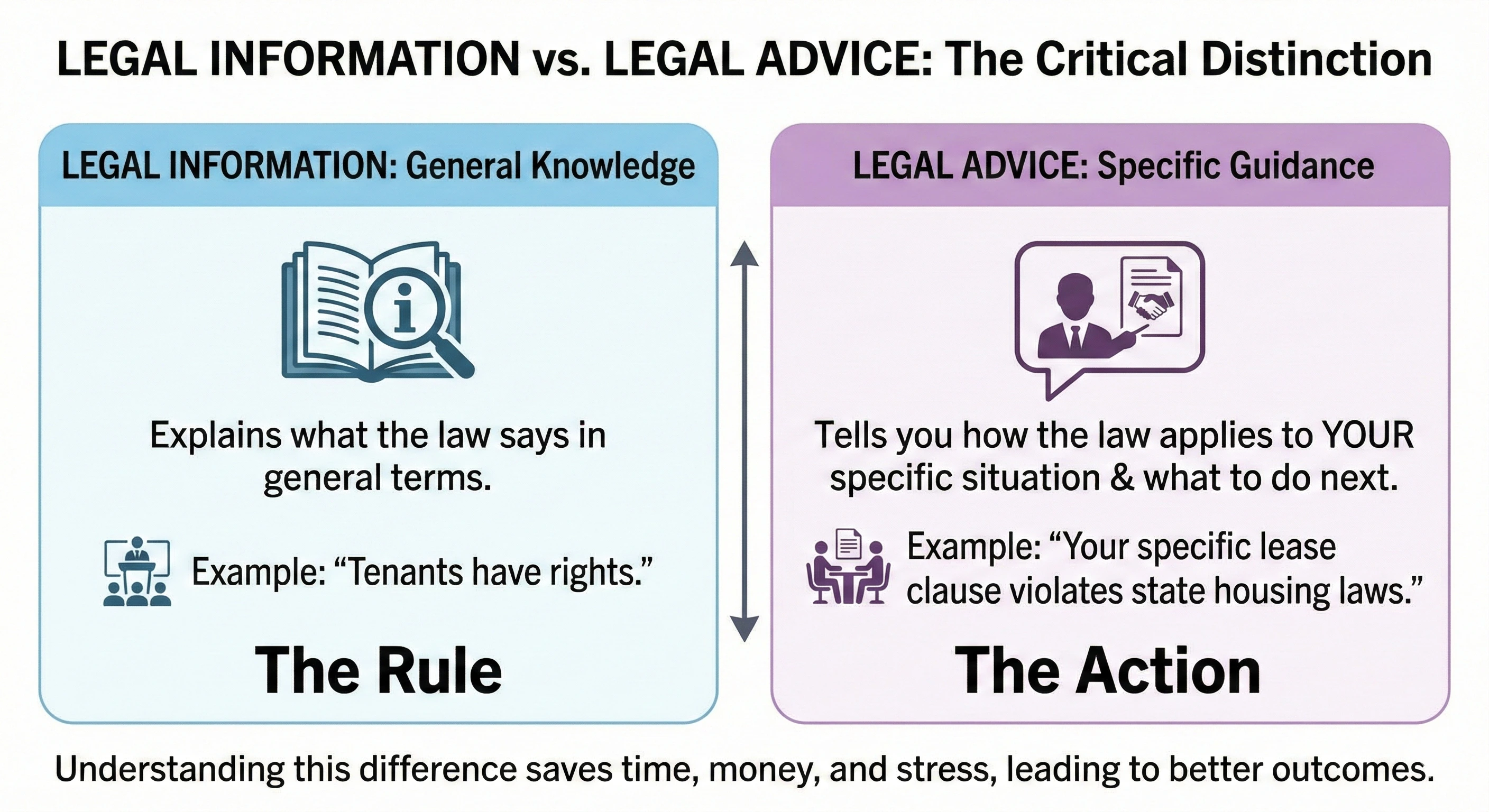
The critical distinction: Legal information explains what the law says in general terms. Legal advice tells you how the law applies to your particular situation and what you should do next.
For example, reading online that "tenants have rights" is legal information. Having an attorney review your lease and explain whether a specific clause violates your state's housing laws is legal advice.
This distinction matters. More than 25% of federal civil cases involve self-represented litigants, and outcomes consistently favor parties with legal representation. Understanding this difference can save you time, money, and stress.
When Do You Actually Need Legal Advice?
Not every legal issue requires an attorney. However, certain situations strongly benefit from professional guidance.
You should seek legal advice when:
- The matter involves significant money, property, or rights. Real estate transactions, divorce proceedings, estate planning, and business contracts carry long-term financial implications.
- You're facing criminal charges of any kind. Even seemingly minor charges can result in criminal records that affect employment, housing, and other opportunities.
- The other party has legal representation. When the opposing side has an attorney, proceeding without one puts you at a substantial disadvantage.
- Paperwork and procedures feel overwhelming. Immigration applications, custody agreements, and civil lawsuits involve complex forms and strict deadlines.
- The situation is already adversarial. If negotiations have broken down, an attorney can protect your interests and handle contentious communications.
You might handle on your own:
- Simple traffic tickets without major penalties
- Small claims court cases below your state's threshold
- Uncontested matters where all parties agree
- Straightforward document needs with established templates
Understanding Different Types of Legal Advice
Legal matters fall into distinct categories, each requiring specialized knowledge.
Personal Injury: Covers accidents, medical malpractice, and wrongful death. Attorneys typically work on contingency (no upfront cost—they're paid from your settlement). These cases involve medical record analysis, insurance negotiations, and damage calculations.
Family Law: Includes divorce, custody, child support, and adoption. These matters often involve emotional complexity alongside legal procedures. Attorneys help navigate court requirements while protecting parental rights and financial interests.
Immigration Law: Addresses visas, green cards, citizenship, and deportation defense. Immigration cases require navigating complex federal regulations with strict deadlines and documentation requirements.
Employment Law: Covers workplace discrimination, wrongful termination, wage disputes, and harassment. Many employment attorneys offer free consultations to evaluate whether you have a viable claim.
Criminal Defense: Handles arrests, charges, and court proceedings. Public defenders are available if you cannot afford private counsel, though private attorneys often provide more personalized attention.
Estate Planning: Involves wills, trusts, powers of attorney, and probate matters. This proactive legal work protects your family's future and ensures your wishes are honored.
How Much Does Legal Advice Cost?
Understanding fee structures helps you budget for legal services and choose the right representation.
Common Fee Arrangements
Free and low-cost options exist:
- Legal aid organizations serve low-income individuals in most communities, handling family law, housing disputes, consumer issues, and public benefits matters.
- Bar association referral services connect you with attorneys offering reduced-fee initial consultations, typically $25-$50 for 30 minutes.
- Law school clinics provide free services through supervised student attorneys, with licensed professors overseeing all work.
- Pro bono programs match qualifying individuals with volunteer attorneys who work without charge, particularly for domestic violence, veterans' benefits, or civil rights cases.
- Online legal services offer document preparation and limited legal advice at lower costs than traditional representation.
How to Find the Right Lawyer
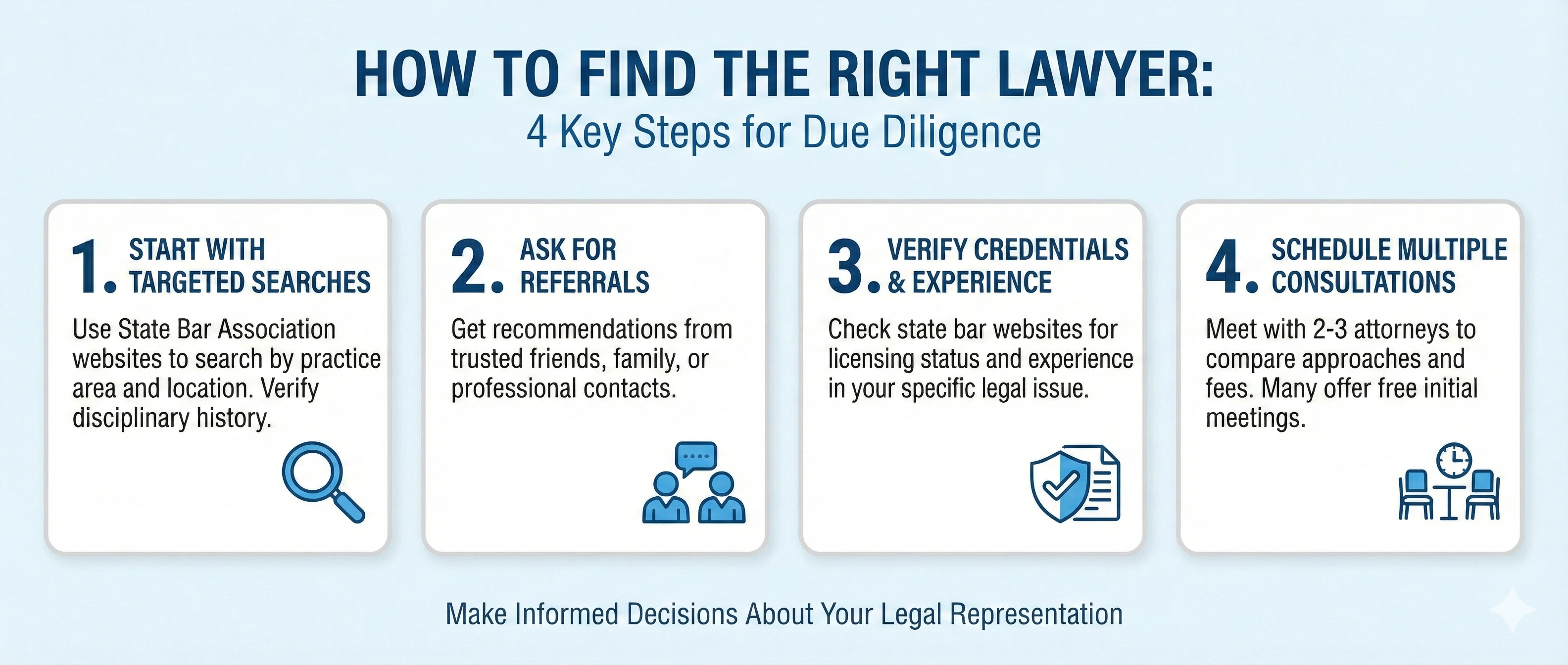
Finding qualified legal help requires research and due diligence. Follow these steps to identify the right attorney for your needs.
1. Start with targeted searches. State bar association websites maintain lawyer directories searchable by practice area and location. These listings include disciplinary history, allowing you to verify an attorney's standing.
2. Ask for referrals from trusted sources. Family members, friends, and colleagues who've faced similar legal issues can recommend attorneys based on personal experience. Professional contacts like accountants or financial advisors often know reputable lawyers.
3. Verify credentials and experience. Check state bar websites for licensing status, disciplinary actions, and any complaints. Look for attorneys with substantial experience in your specific legal issue—not just general practice.
4. Schedule consultations with multiple attorneys. Most lawyers offer free or low-cost initial consultations. Meeting with two or three attorneys allows you to compare approaches, personalities, and fees.
Questions to Ask During Consultations
- How much experience do you have with cases like mine? Specialization matters. An attorney who handles your specific issue regularly brings valuable expertise.
- What's your assessment of my situation? A good attorney provides honest evaluation, including potential weaknesses. Be wary of lawyers who promise specific outcomes.
- What are your fees and billing practices? Get clear information about hourly rates, retainer requirements, and additional costs. Request a written fee agreement.
- What's your communication policy? Understand how often you'll receive updates and typical response times for questions.
- What's the likely timeline? Experienced attorneys can estimate how long similar cases typically take and identify factors that might affect duration.
Preparing for Your Legal Consultation
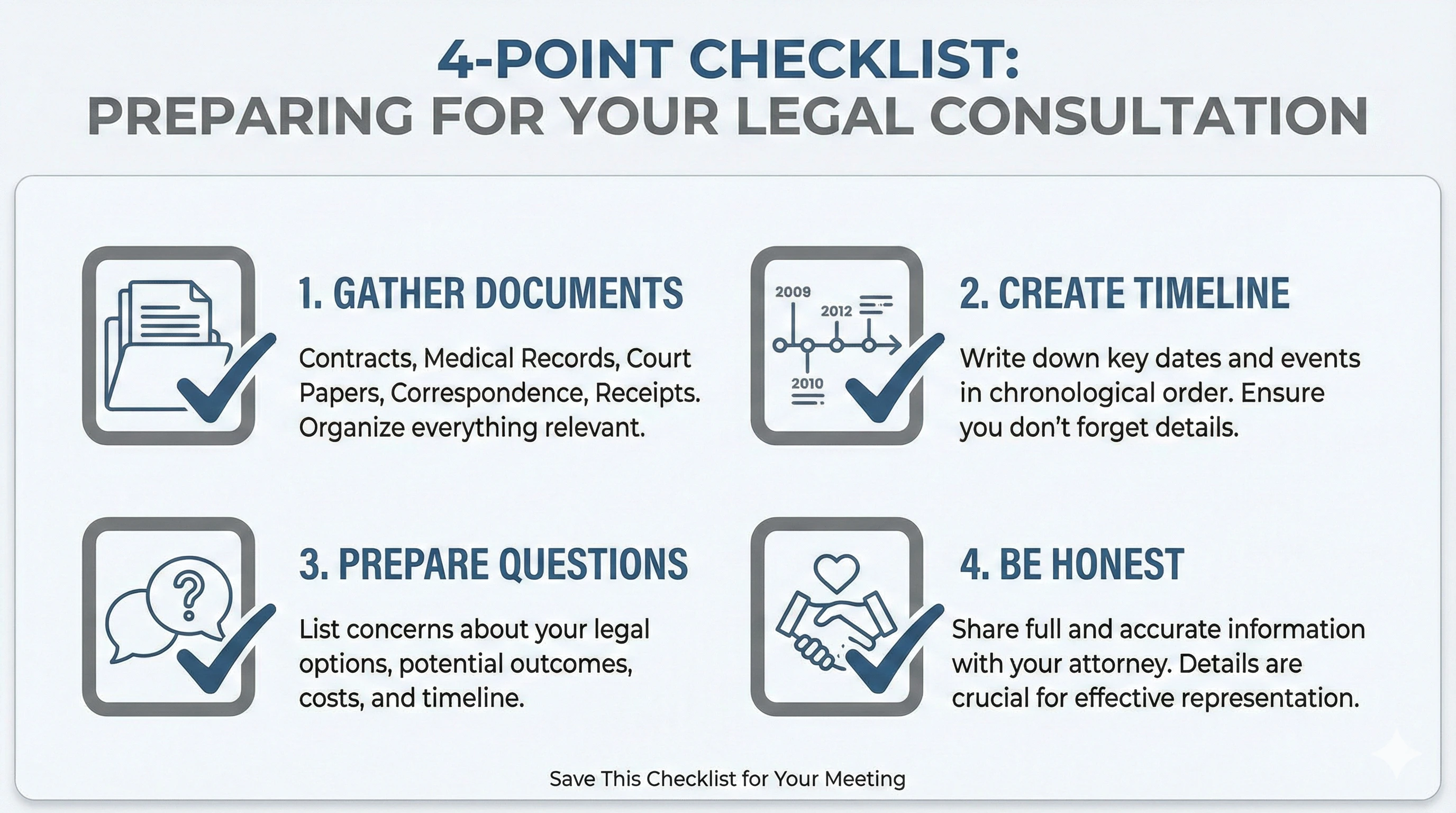
Maximizing your consultation time requires preparation. Follow these four essential steps:
1. Gather relevant documents: Contracts, correspondence, court papers, medical records, receipts, or other materials related to your legal issue. Organized documentation helps attorneys quickly understand your situation.
2. Create a timeline: Write down key dates and events in chronological order. This helps you communicate clearly and ensures you don't forget important details.
3. Prepare questions: List what you need to know about your legal options, potential outcomes, costs, and timeline. Having questions written down prevents you from forgetting them during the meeting.
4. Be completely honest: Attorneys need full information to provide accurate advice. Details you might find embarrassing could be legally irrelevant—but your attorney needs to know everything to represent you effectively.
Preparing for Your Legal Consultation
Maximizing your consultation time requires preparation. Follow these four essential steps:
1. Gather relevant documents: Contracts, correspondence, court papers, medical records, receipts, or other materials related to your legal issue. Organized documentation helps attorneys quickly understand your situation.
2. Create a timeline: Write down key dates and events in chronological order. This helps you communicate clearly and ensures you don't forget important details.
3. Prepare questions: List what you need to know about your legal options, potential outcomes, costs, and timeline. Having questions written down prevents you from forgetting them during the meeting.
4. Be completely honest: Attorneys need full information to provide accurate advice. Details you might find embarrassing could be legally irrelevant—but your attorney needs to know everything to represent you effectively.
What to Expect When Working with a Lawyer
Understanding the attorney-client relationship helps you collaborate effectively.
Engagement begins with paperwork. You'll sign an engagement letter or retainer agreement outlining services, fees, and both parties' responsibilities. Read this carefully before signing and ask questions about anything unclear.
Communication flows both ways. Your attorney will request information and documents as your case progresses. Responding promptly to these requests prevents delays. Expect regular updates, though frequency depends on case activity and your agreement.
Strategy evolves as cases develop. Initial legal strategies may change as new information emerges or circumstances shift. Good attorneys explain why approaches change and involve you in significant decisions.
Your role matters. Even with excellent legal representation, you're part of the team. Attending meetings, reviewing documents, and following your attorney's guidance all impact outcomes.
Common Mistakes to Avoid
Learning from others' experiences helps you navigate legal matters more successfully. Here are the five most critical mistakes to avoid:
1. Waiting too long to seek help. Statutes of limitations create deadlines for filing certain claims. Missing these deadlines can eliminate your legal options entirely. Early consultation preserves all available remedies.
2. Choosing solely based on cost. The least expensive attorney isn't always the best value. Consider experience, specialization, and communication style alongside fees. Inexperienced counsel can cost more in the long run through mistakes or inefficiency.
3. Failing to follow attorney advice. You hire lawyers for their expertise. While you make final decisions, disregarding professional recommendations without good reason rarely serves your interests.
4. Poor communication with your attorney. Update your lawyer about relevant developments in your case. Return calls and emails promptly. Provide requested information and documents without unnecessary delay.
5. Not getting everything in writing. Verbal agreements and informal arrangements create confusion. Request written confirmation of fee arrangements, agreed-upon services, and settlement terms.
The Future: Technology and Legal Services
Legal service delivery continues evolving with technology, creating new options for accessing legal help.
1. Virtual consultations have become standard practice. Video conferences save travel time while allowing face-to-face interaction. Many attorneys now offer flexible meeting options including in-person, phone, and video.
2. Online legal platforms provide accessible services. Document preparation services, contract reviews, and limited legal advice are available at reduced costs. These services work well for straightforward matters but may lack the personalization complex cases require.
3. Artificial intelligence assists with legal research. AI helps attorneys work more efficiently with document review and research tasks. This technology can reduce costs while improving thoroughness, though it complements rather than replaces attorney expertise.
These developments increase access to legal services for many people. However, complex legal matters still benefit from traditional attorney-client relationships with personalized attention and strategic guidance.
Taking the First Step
Legal issues rarely resolve themselves. Taking action—even just scheduling a consultation—moves you toward resolution.
Immediate actions you can take:
- Search your state bar association website for attorneys practicing in your area of need, filtering by location, practice area, and languages spoken.
- Contact your local legal aid office if you have limited income. Even if you don't qualify for free services, they can direct you to reduced-fee options.
- Document your situation while details remain fresh. Write down key facts, dates, and names. Gather relevant paperwork.
- Reach out to bar association referral services for reduced-cost initial consultations to understand whether you need full representation.
Empowered Decision-Making
Understanding legal advice basics helps you make informed decisions about seeking professional help. While not every legal issue requires an attorney, knowing when and how to find qualified representation protects your rights and interests.
The legal system can feel intimidating, but remember that resources exist to help. From free legal aid to payment plans with private attorneys, options are available regardless of your financial situation. Taking that first step toward legal advice is often the hardest part—but it's also the most important.
How Remote Case Managers Help Attorneys Manage Their Workload
While legal advice focuses on client guidance, remote case managers support the operational side of legal practice, helping attorneys run more efficient and organized law firms.
- Reduce administrative workload: Handle case organization, file management, and deadline tracking so attorneys can focus on legal strategy and client representation.
- Improve case management efficiency: Coordinate documents and monitor case progress to prevent delays and missed deadlines.
- Support client communication: Assist with client follow-ups, document collection, and scheduling under attorney supervision.
- Enhance law firm productivity: Streamline workflows and help attorneys manage higher caseloads more effectively.
- Provide scalable legal support: Allow law firms to adjust support levels based on workload without hiring full-time, in-house staff.









.webp)




.webp)


%20(1).webp)





















%20(2)%20(2).avif)
.avif)