
When someone decides to file for divorce or fight for custody of their child, the first thing most of them do is open a search engine. They are not browsing casually. They are looking for someone they can trust with one of the hardest decisions of their life, and they need to find that person fast.
That search is your window. If your firm does not show up, a competitor does.
Family law is one of the few practice areas where a potential client may decide on an attorney within days of starting their research. They are emotionally charged, time-pressured, and often searching late at night or on weekends. No referral, no billboard, and no word-of-mouth recommendation matters if your firm is not visible when that search happens.
That is what family law advertising is for. It keeps your firm in front of the right people, at the right moment, across the right channels.
Key Takeaways
- 48% of family law clients decide on an attorney within 3 days of starting their search. Being visible at that moment is the whole game.
- Family law advertising and family law marketing are not the same. Advertising is the paid-placement piece of a broader marketing strategy.
- The most effective campaigns combine channels: TV or streaming for awareness, Google Ads for intent, social media for trust.
- Advertising only pays off when your intake process can handle the volume. Fast follow-up is just as important as the ad itself.
What is Family Law Advertising?
Family law advertising is any paid effort a firm uses to reach people who need help with divorce, child custody, adoption, domestic violence, child support, or related matters.
It is one part of a broader family law marketing strategy. Marketing covers your website, SEO, content, and referral network. Advertising covers the paid placements: TV commercials, Google Ads, Local Services Ads (LSAs), social media ads, display ads, billboards, and radio or podcast spots.
The distinction matters for budget planning. Marketing builds your foundation over time. Advertising puts you in front of clients right now.
Why is Family Law Advertising Important?
Family law is personal, urgent, and local. Advertising works differently here than in other practice areas because the stakes for clients are high and the decision window is short. Here are the six outcomes it drives for your firm.
1. Brand Awareness Before Clients Need You
Most people do not know which family attorney they will call until they need one. Consistent advertising keeps your firm's name in front of your local market before that moment arrives.
When someone searches "family law attorney near me" at 11pm, they are more likely to click on a name they have already seen. Familiarity shortens the decision cycle. Brand awareness is not a vanity metric. It is a lead generation strategy that compounds over time.
2. Trust With a Vulnerable Audience
Family law clients are often in crisis. They need to believe their attorney understands their situation before they pick up the phone.
Advertising that leads with empathy, attorney credentials, and real client outcomes builds credibility before the first call. Aggressive or misleading ads backfire fast in this practice area. The tone of your advertising signals your firm's values to prospects who are already under stress.
3. Qualified Leads at the Right Moment
Research shows 48% of family law clients make their hiring decision within three days of starting their search. Google Ads and LSAs capture these high-intent prospects at exactly that moment.
LSAs are especially useful. You pay per lead rather than per click, and the Google Screened badge adds a layer of instant credibility. In moderately competitive markets, LSAs often deliver the best cost-per-case of any paid channel.
4. Client Retention and Referrals
A client who remembers your firm positively is more likely to refer a friend or return for a post-judgment modification. Consistent advertising keeps your brand visible after a case closes.
Harvard Business Review data shows acquiring a new customer can cost 25 times more than keeping an existing one. Advertising that reinforces your reputation after an engagement ends is one of the lowest-cost retention tools available.
5. Differentiation in a Crowded Market
In major metro areas, a prospect may see 50 or more family law firms in the same search results. A firm with no advertising presence is invisible in that field.
Clear messaging around a specific niche (high-asset divorce, fathers' custody rights, same-sex family law) gives your firm a concrete reason to be chosen. Generic positioning rarely wins in saturated markets.
6. Data to Make Better Business Decisions
Advertising creates measurable KPIs: cost per lead, consultation-to-client conversion rate, and geographic reach. Firms that advertise have numbers to act on. Those that do not are making decisions by feel.
Call tracking software, Google Analytics, and attribution tools for TV campaigns tell you exactly which channels are driving cases and which are draining budget. For a breakdown of the tools remote legal teams use to stay organized and accountable, see our guide to the top tools for managing remote case managers.
Google Ads and Local Services Ads
Google Ads put your firm at the top of results for searches like "emergency custody attorney" or "divorce lawyer consultation." These keywords attract clients who are ready to hire today.
Divorce-related terms can run $50 to $100+ per click in competitive markets. Long-tail keywords like "divorce mediation attorney [city]" lower costs while pulling in more qualified prospects.
LSAs sit above traditional paid search results and operate on a pay-per-lead model. For firms without a strong organic presence yet, LSAs are often the fastest path to new cases.
Broadcast and Streaming Television
Local TV advertising creates the halo effect: viewers extend trust from the news content they watch to the attorneys advertised alongside it. Sponsoring local news programs or lifestyle segments puts your attorneys on screen in a credible context.
Streaming TV (OTT/CTV) extends that reach to cord-cutters and younger audiences. It adds ZIP-code targeting, life-event audience segments, and measurable attribution. A "Total TV" approach combining broadcast and streaming consistently outperforms either channel alone.
Social Media Advertising
Facebook and Instagram allow targeting by age, location, and life events like recent separation or marriage. This reaches prospects before they have started actively searching.
Educational content outperforms aggressive calls to action here. A short video walking through what to expect at a custody hearing builds more trust than a banner ad with a phone number. Retargeting past website visitors on social platforms is one of the highest-return uses of a social ad budget.
Billboards and Print
Print and billboard advertising still accounts for roughly 19% of law firm marketing spend. These formats work best paired with digital. A billboard builds name recognition. A Google retargeting ad captures the follow-through search days later.
How Much Should a Family Law Firm Spend on Advertising?
Established family law firms should target 7 to 12% of gross revenue for total marketing spend. The U.S. Small Business Administration recommends 7 to 8% of gross revenue as a baseline for service businesses, and consumer-facing practices like family law typically land at the higher end of that range. Growth-focused firms often push to 15%.
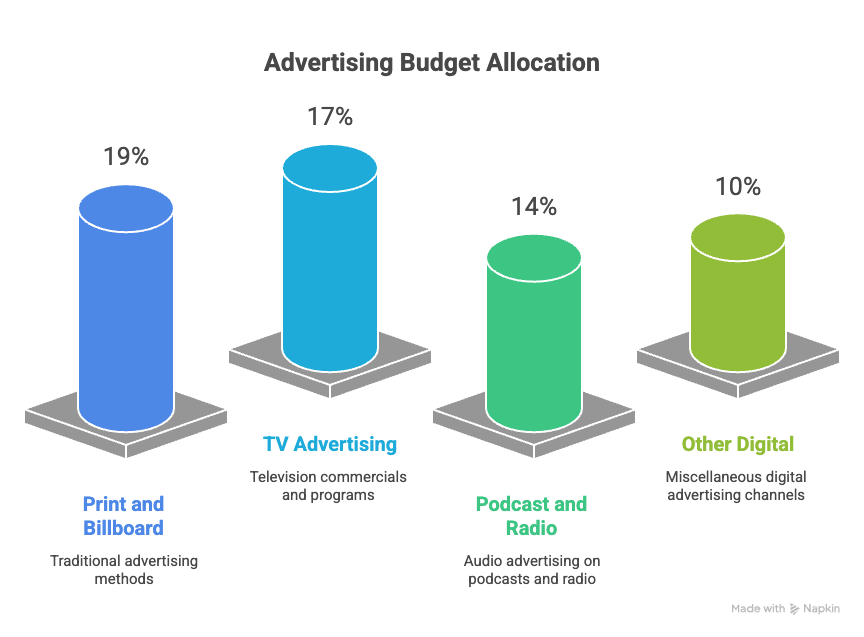
Average spend breakdown across the legal industry:
- 19% on print and billboard
- 17% on TV advertising
- 14% on podcast and radio
- 10% on other digital
Digital is gaining share fast. Firms shifting budget toward Google Ads, LSAs, and streaming TV are generally seeing lower cost-per-case results compared to firms that remain print-heavy. Track cost per signed case, not just cost per click, to know what is actually working in your market.
Family Law Advertising Best Practices
Lead with empathy, not aggression. Messaging like "We help families find resolution" consistently outperforms "We will fight for you." Family law clients are not looking for a combatant.
Stay within State Bar guidelines. Avoid guaranteed outcome language, misleading comparisons, or anything implying special influence over a judge or court. Compliance is not optional.
Match ads to your intake capacity. Advertising that generates leads your team cannot follow up on within one hour is wasted spend. The ABA reports that over 35% of legal consumers expect a response within one hour of contacting a firm. Slow follow-up is where good leads go cold. If your firm is hitting that bottleneck, read how remote staffing addresses the five biggest law firm growth challenges.
Keep your brand consistent. The message in your TV spot, your Google landing page, and your intake call should all feel like the same firm. Inconsistency creates doubt at the worst moment.
How a Remote Case Manager Turns Advertising Into Signed Cases
Advertising fills the top of your pipeline. A remote case manager for law firms keeps leads from falling out the bottom.
When ads perform well, call volume goes up. Consultations need scheduling. Intake forms need completing. Follow-up calls need to happen within the hour. Attorneys managing active cases cannot cover all of this.
A trained remote case manager handles intake coordination, lead follow-up, CRM data entry, calendar management, and client communication inside platforms your firm already uses: Clio, Filevine, MyCase, and others. For firms ready to scale with virtual staffing, this is where advertising ROI becomes measurable.
Frequently Asked Questions
What is the difference between family law advertising and family law marketing?
Advertising covers paid placements like Google Ads, TV spots, and social media ads. Marketing is the broader strategy including SEO, content, referrals, and reputation. Both work better together than separately.
What is the best advertising platform for family law firms?
Google Ads and LSAs capture high-intent leads ready to hire. TV and streaming build brand awareness. Social media handles life-event targeting and retargeting. Most high-performing firms use a combination of two or three channels.
How much should a family law firm spend on advertising?
Established firms typically allocate 7 to 12% of gross revenue. Growth-focused firms often reach 15%. The right number depends on your local market size and how competitive your practice area is in your region.
Is TV advertising still effective for family law firms?
Yes, particularly when combined with streaming TV. Broadcast builds brand trust through the halo effect of local news. Streaming adds precise targeting and measurable attribution to reach audiences broadcast alone misses.
How do I measure the ROI of family law advertising?
Track cost per lead, cost per consultation, and cost per signed case. Use call tracking software, Google Analytics, and attribution tools for TV. Measuring at the case level rather than the click level gives you the most accurate picture of performance.
Turn Your Advertising Budget Into a Growth System
Family law advertising is not a one-time campaign. It is an ongoing system: ads create visibility, visibility creates leads, leads need a fast and organized intake process to become clients.
Firms growing consistently in 2026 treat advertising as infrastructure. They choose a channel mix that fits their market, set a realistic budget, track the right metrics, and make sure their operations can handle the volume the ads produce.
Start by auditing your intake. How fast does your firm respond to new inquiries? How many leads go unanswered after hours? That is where advertising ROI disappears. Fix the intake bottleneck first, then scale the ads.









.webp)



.webp)


%20(1).webp)






















%20(2)%20(2).avif)
.avif)